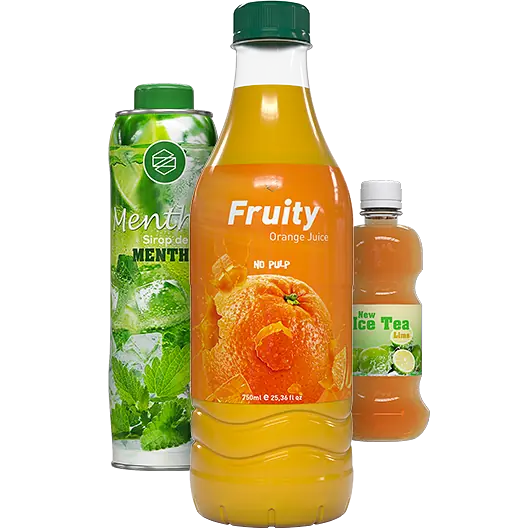
Planning a beverage filling and packaging line?
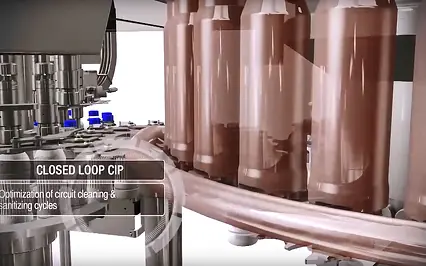
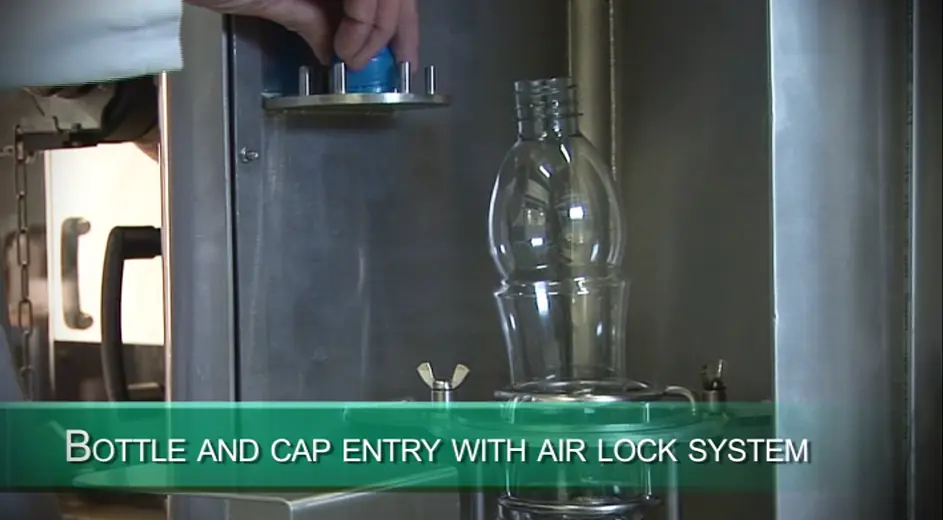
Tell us about your recipe, container, target output and distribution conditions. Our teams can help define filling, decontamination and closure requirements. The technical assessment compares relevant processes, including cold filling, hot-fill or aseptic filling where appropriate, to evaluate the configuration best suited to your project and shelf-life objectives.
Talk to a Serac expert
Does your project also involve other liquid foods? Explore our filling and packaging solutions for oils and sauces.
Beverage filling and packaging FAQs
What is the difference between aseptic filling, hot-fill and ambient filling?
Aseptic filling aims to prevent recontamination of a treated product during filling and closure. Hot-fill uses a high filling temperature and compatible packaging within a validated process. Ambient describes a filling or storage temperature, rather than a hygiene level. Distribution without refrigeration before opening depends on validation of the formulation, product treatment, packaging process and intended shelf life.
How does Serac handle beverages containing pulp or fruit pieces?
The assessment considers particle size and concentration, viscosity and product sensitivity. The dosing system, product passages and filling nozzles are selected accordingly. Trials check dosing consistency, product flow and the handling of inclusions. Compatibility depends on the recipe and equipment configuration and must be confirmed for each project.
Which containers can run on the same beverage filling line?
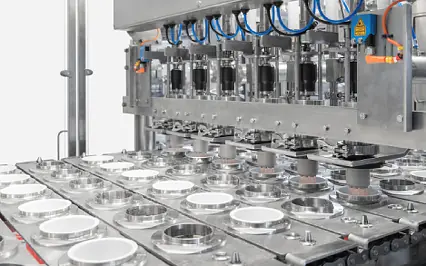
Serac solutions cover different bottle and cup families depending on the model. A line configured for multiple formats is not automatically compatible with PET or glass. Changes in material or closure require technical assessment.
What is the difference between ESL and aseptic beverage packaging?
ESL stands for Extended Shelf Life. For the chilled beverages concerned, this approach combines product treatment, packaging hygiene and cold chain control. Aseptic filling, together with appropriate treatment and packaging, can enable ambient distribution. Shelf life and storage conditions must be validated for the finished product.
What information is needed to specify a beverage filling line?
Provide the formulation, pH, viscosity, any particles, filling temperature, container sizes and materials, closures, target output and expected format changes. Include the required shelf life, distribution conditions, available utilities and site constraints. These details support a coherent technical assessment.